How to Use Tarot for Decision Making Without Giving Away Your Power
The cards can help you see a choice more clearly. They cannot make the choice for you, and they should not. Here is how to use a deck as a thinking tool, not a substitute for your own judgment.
People often come to tarot at the exact moment they would like someone else to decide. Should I take the job? Should I move? Should I stay in this relationship? The hope, sometimes unspoken, is that a card will appear with a clean yes and the anxiety will stop. Occasionally a spread does feel that clear. More often, a good decision-making reading does something quieter and more useful: it shows you what you already know, what you are afraid of, and what you have not been willing to say out loud.
That is a better outcome than an oracle. If you hand the choice to the deck, you also hand over the responsibility, and you will be back tomorrow with the same question, hoping the answer has improved. This guide is about using tarot as a thinking partner — a structured way to look at a decision — without giving the cards a power they should not have.
All of this is for reflection and entertainment, not professional advice. For medical, legal, financial or mental-health decisions, talk to a qualified person. The disclaimer on this site is there for a reason.
Better questions than "should I?"
"Should I?" puts the cards in the role of a parent. Try questions that keep you in the chair:
- "What do I need to understand about option A?"
- "What am I hoping this choice will fix, and will it?"
- "What would I be saying yes to, in practice, not in fantasy?"
- "What am I afraid would happen if I chose either way?"
- "What would a responsible next step look like this week — not a forever verdict?"
If you cannot phrase the decision without the word should, try writing both options as complete sentences: "I take the job and move in March" versus "I stay and renegotiate my role." The more concrete the options, the more useful the cards. Vague options produce vague readings.
A yes-or-no question can still have a place for small, low-stakes matters, or as a first snapshot. Our yes or no tool and the longer yes-or-no card guide are there for that. For anything that will still matter in a year, use a spread with more than one position.
A three-card decision spread
This is the layout we recommend first, because it is hard to hide in.
- The heart of the decision — what this choice is really about, underneath the surface question.
- The cost or risk you may be avoiding — including the cost of doing nothing.
- The most helpful attitude or action now.
Card one often surprises people. You think you are asking about a job, and The Hierophant or The Empress appears, and you realize the decision is also about family expectations, or about wanting a more humane pace. You think you are asking about a relationship, and the Eight of Pentacles appears, and the question was also about work and attention.
Card two is where the reading earns its keep. The Nine of Swords can show that fear, not facts, is running the argument. The Four of Cups can show you are dismissing a decent option because it is not glamorous. The Devil can show a habit you would be taking with you, whatever you choose.
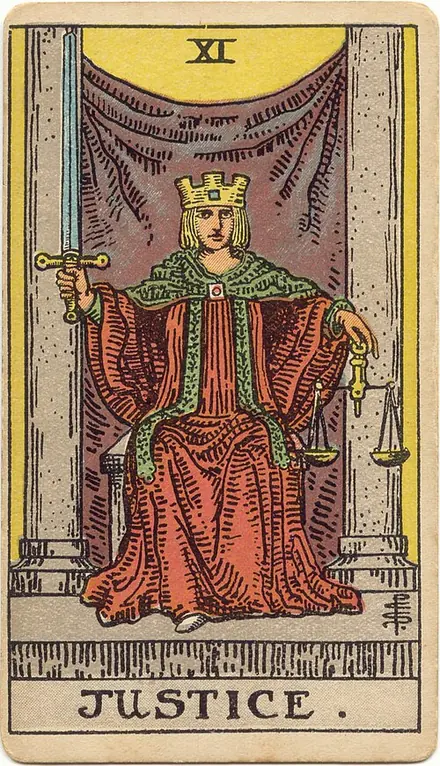
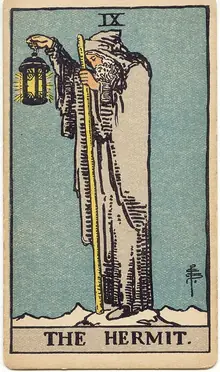
Card three should be translated into a behavior you could do this week. The Hermit might mean take a weekend without lobbying friends for opinions. Justice might mean list the actual terms of each option, on paper. The Ace of Wands might mean start the application, send the email, or test the idea in a small way instead of debating it in your head.
You can practice this layout with our free three-card reading by choosing "situation, challenge and advice," then reading the positions through the lens of your decision.
A five-card spread for two options
When there are two clear paths, give each one room, then look at yourself.
- The likely lived reality of option A, in the near term.
- The likely lived reality of option B, in the near term.
- What you hope this decision will do for you.
- What you are afraid of, either way.
- Advice for choosing in line with your values, not your panic.
Read positions 1 and 2 as descriptions, not as a contest of "good card versus bad card." The Ten of Pentacles in option A might be real stability, or it might be a comfortable life that would slowly bore you; only you can tell, using card 3 and card 4. The Fool in option B might be a brave beginning, or a leap you would take mainly to escape. The "better" card is the one that fits a life you are willing to stand inside.
If both option cards are difficult — say the Five of Pentacles and the Five of Wands — the reading may be telling you that both paths have a genuine cost. That is important information. It does not mean you are trapped. It means you should stop searching for a cost-free door, and start asking which cost you would rather pay.
What to do when the cards seem to conflict
Conflict is not a failed reading. It is often the point.
A bright card and a hard card together can describe a good option with a real price, or a hard option with a real gift. Use the combination method in our guide to reading cards in pairs: one card is the scene, the other is the modifier. The Sun plus the Ten of Wands can mean a success that will be heavy to carry. The Tower plus The Star can mean a disruption that makes a truer path possible.
Reversed cards, if you use them, often show delayed energy, inward versions of a theme, or a need to adjust course. They are not automatic nos. See what reversed cards mean.
If the whole spread feels like noise, the problem may be the question, not the deck. You might be asking two decisions at once ("Should I leave this job and this city and this relationship?"). Split them. Or you might already know, and the noise is resistance. In that case, one clarifying question is enough: "What am I afraid will happen if I do the thing I already believe is right?"
When to stop pulling cards
This is the part most guides skip, and it is the part that protects you.
Stop when you can say the decision, or the next step, in a plain sentence. Stop when you notice you are shuffling again because you did not like the first answer. Stop when you have read for the same choice more than twice in a short period. Repeating a question until the cards "get nicer" is not divination. It is bargaining.
It also helps to set a rule in advance: one spread, written down, then 24 hours before any further cards. Live with the image of the reading while you walk, work and talk to people you trust. If the interpretation is solid, it will still make sense tomorrow. If it was only adrenaline, it will fade, and that is useful too.
Do not use the deck to override someone else's clear no, or to delay help you already know you need. Tarot can accompany a hard choice. It should not become the way you avoid making one.
A practical routine you can reuse
- Write the decision and the options in a notebook, in ordinary language.
- Choose a spread (three cards, or five if there are two paths) and stick to it.
- Shuffle, draw, and write one sentence per position before you open any book or card page.
- Then look up the cards and adjust the sentences, using combinations where two cards are clearly talking to each other.
- Finish with a next step that fits in a calendar: an email, a conversation, a budget, a week of thinking, an appointment with a professional.
- Close the deck. Do one ordinary thing.
If you want a second viewpoint after that, a friend or a journal may be more helpful than a second spread. The goal is not to collect meanings. The goal is to return to your life able to choose, and able to live with the choice.
Used this way, tarot is not a shortcut around courage. It is a way of sitting still long enough to hear yourself. The cards lay out images; you decide what to do with the life they are pointing at. That division of labor is not a limitation of the tool. It is the thing that keeps the tool honest — and that keeps your decisions yours.
Try it yourself: free three-card reading, card of the day, yes or no tarot, or the three-card spread guide.