7 Love Tarot Spreads for Real Relationship Questions
A useful love reading starts with a useful question. These seven spreads cover new attraction, mixed signals, long-term bonds and the moments when you need clarity, not more cards.
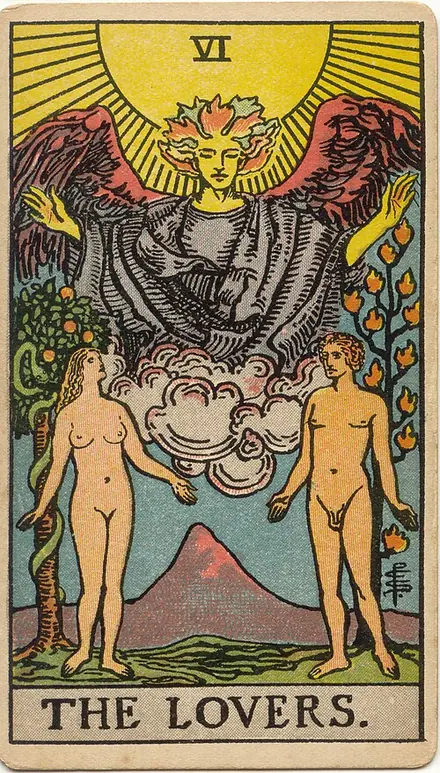
Love is the question that brings most people to a tarot deck, and it is also the question that is easiest to ask badly. "Does this person love me?" and "Are we meant to be?" sound specific, but they push the cards into a yes-or-no corner and leave you with a feeling instead of a plan. A well-designed love spread does something more useful: it separates what you feel from what the other person is showing, names the pattern between you, and points to a next step you can actually take.
The spreads below are the ones we use most often on Pick Three Cards. They range from a simple three-card layout you can try in our free reading tool to a five-card layout for a serious crossroads. None of them predicts a wedding date or a breakup. They are tools for reflection, and they work best when you treat the cards as a conversation, not a verdict.
How to ask a better love question
Before you shuffle, tighten the question. Swap fate language for something you can act on.
- Instead of "Are we soulmates?", try "What is the true nature of the connection between us right now?"
- Instead of "Will they come back?", try "What do I need to understand about this ending, and what would help me move forward?"
- Instead of "Should I stay?", try "What is working in this relationship, what is not, and what would a honest next step look like?"
Write the question down. If you cannot say it in one sentence, you are probably asking two questions at once, and the spread will feel muddy. It also helps to decide, before you draw, whether you want a snapshot of the present or advice about what to do next. Those are different jobs, and they belong in different positions.
A note on ethics: do not use a love spread to spy on someone who has asked for space, or to override a clear "no." The cards can help you understand your own position. They cannot give you permission to ignore someone else's.
1. Past, present and future in love
This is the classic three-card line, read through a relationship lens.
- Past — the pattern or event still coloring the connection.
- Present — the heart of the matter today.
- Future — the direction things are heading if nothing important changes.
It is a good first spread when you want a story rather than a single answer. The future card is a trend, not a contract. If the Ten of Swords or The Tower appears in that position, it often describes a truth that is already arriving, not a punishment the cards have invented.
You can run this exact layout in our three-card reading by choosing the love spread. If you are new to positions, the guide to reading three cards walks through the method in more detail.
2. You, the other person, and the relationship
This is the most reliable three-card love spread we know, because it stops you from reading every card as a comment on yourself.
- You — your energy, hopes or fears in the situation.
- The other person — what they are bringing, as far as the cards can show it.
- The relationship — the dynamic that appears when those two energies meet.
Court cards in position two are especially useful. A Knight of Cups can describe someone who leads with romance and promises; a King of Swords can describe someone who is careful, reserved or more interested in clarity than in comfort. Do not treat a court card as a guaranteed physical description. Treat it as a style of relating.
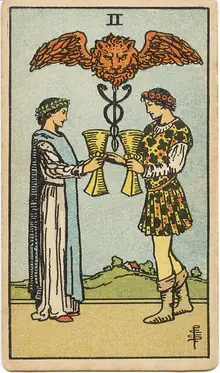
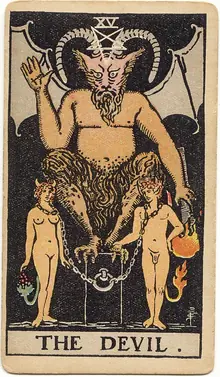
When The Lovers or the Two of Cups lands in the relationship position, the bond itself has real warmth or a real choice at its center. When the Five of Swords or the Devil appears there, the pattern between you needs more attention than either person's private feelings.
3. What they feel, what they show, and what is hidden
Use this when the words and the behavior do not match.
- What they feel — the inner weather, which may or may not be spoken.
- What they show — the face they put on the situation.
- What is hidden or unsaid — the gap, the hesitation, or the thing neither of you is naming.
The High Priestess and The Moon are at home in the third position; they often mean you do not have all the information yet, and that pulling more cards will not invent it. The Seven of Swords here can point to avoidance or a half-truth. The Three of Swords can point to a hurt that is being managed quietly.
This spread is easy to misuse. "What they feel" is not a license to decide you know someone better than they know themselves. If the cards and the person's actual words disagree, believe the person's words about their own life, and use the cards to notice how you are reacting.
4. Situation, obstacle and advice
When you already know how you feel and you need a way through, this three-card spread is cleaner than a fortune-telling layout.
- The situation — the heart of the problem in love, named plainly.
- The obstacle — what is in the way, including a habit of your own.
- Advice — the most helpful attitude or action now.
Advice cards work best when you translate them into a behavior. Strength might mean stay kind and hold a boundary, not "try harder to be patient forever." The Eight of Cups might mean it is time to walk away from a pattern that has already taught you what it can. The Ace of Cups might mean lead with openness, or make the first honest conversation.
This is also a strong spread after a fight, when a bigger layout would only stir the water.
5. A five-card "should I stay" spread
Some questions are too heavy for three cards. If you are weighing whether to continue a relationship, this layout keeps the decision in your hands and still gives the cards a clear job.
- What is working.
- What is not working.
- What you are afraid of.
- What you would need in order to stay well.
- The likely path if you leave, in the near term.
Read positions 1 and 2 as a pair, not as a scoreboard. A single beautiful card in "what is working" does not cancel a repeated pattern in "what is not." Position 3 is often the most revealing: The Hermit can show a fear of being alone; the Ten of Pentacles can show a fear of losing a life you have built; The Fool can show a fear of starting over, or a buried wish to do exactly that.
Position 5 is not "you will be happier if you go." It is a picture of the immediate landscape of leaving — practical, emotional, or both — so you can decide with your eyes open. For help weighing two options without handing the choice to the deck, see our guide to tarot for decision making.
6. New love and potential
When something is just beginning, or you want to understand a crush without inflating it, try this four-card spread.
- The energy of the attraction.
- What you are bringing to it.
- A challenge or timing issue.
- The best way to approach the connection.
Early-stage cards to watch: the Aces (a real beginning, still fragile), The Fool (a leap, sometimes naïve), the Knight of Cups (a sincere or dramatic offer), and The Magician (chemistry plus initiative). Heavy Major Arcana cards can appear even in a new connection; they do not automatically mean "this is the one." They often mean the experience is touching a bigger theme in your life — self-worth, freedom, family patterns — and that is worth noticing.
If you want a reading that is focused only on the idea of a soulmate, some people enjoy a dedicated love app as a playful extra. We recommend treating that kind of reading as entertainment, then coming back to a spread like this one when you want something you can use in real life.
7. What I need: a self-love and needs spread
Not every love reading is about another person. When you feel depleted, stuck in a pattern, or about to choose from loneliness rather than interest, ask the cards about you.
- What I am feeling, under the surface.
- What I have been giving away or ignoring.
- What would actually nourish me now.
- A boundary or habit that would help.
The Empress, Four of Swords, Nine of Cups and Star often speak well in the third position, but so do less "pretty" cards. The Five of Pentacles can say you need practical support, not another pep talk. Justice can say you need a fair arrangement, including with yourself.
This spread is also a good reset after several readings about the same person. If you have already drawn for them three times in a week, stop and ask what you need instead. Repeating a question until the cards "improve" is how useful readings turn into anxiety.
Cards that often show up in love readings
A short field guide, with the reminder that context always wins. For a fuller walk through the big archetypes, see the Major Arcana in love readings.
- The Lovers — a real choice, alignment of values, or a significant attraction. Not automatically "they are the one."
- Two of Cups — mutual interest, a meeting in the middle, a bond that can be simple and sincere.
- Ten of Cups — emotional fulfillment, family feeling, a picture of shared happiness that still needs daily upkeep.
- Three of Swords — heartbreak, a hard truth, or a necessary grief. Sometimes the kindness is to name it.
- The Devil — compulsion, temptation, a bond that feels hard to leave, or chemistry that is running the show.
- Four of Wands — a milestone, a sense of home, a reason to celebrate what is stable.
- The Tower — a sudden revelation or rupture. In love, it can be a confession, a breakup, or a story that can no longer stand.
If two of these appear together, read them as a sentence, not as two separate fortunes. Our guide to tarot card combinations shows how to do that with worked examples.
A few habits that keep love readings honest
Shuffle with the question in mind, then stop. Draw the number of cards the spread asks for. Do not add "clarifiers" until you have sat with the first cards for a few minutes; extra cards are often a way of running from an answer you already understood.
Read reversals if that is part of your practice — our guide to what reversed cards mean can help — but do not let a reversed Lovers turn into a catastrophe on its own. Note the date and the question in a journal so you can see whether you are asking the same thing every week.
And if the reading is about a painful situation, put the deck down afterward and do one ordinary thing: a walk, a meal, a message to a friend. The point of a love spread is not to live inside the cards. It is to come back to your life with a slightly clearer picture of what is true, and what you want to do about it.
Try it yourself: free three-card reading, card of the day, yes or no tarot, or the three-card spread guide.