How to Read Tarot Card Combinations (With 10 Worked Examples)
A single card names a theme. Two or three cards tell a story. Here is a practical way to read combinations, with real examples you can reuse in any spread.
Most beginners learn tarot one card at a time, which is the right place to start. The trouble comes in a real spread, when The Sun and the Ten of Swords show up side by side and the little white book offers two meanings that seem to cancel each other out. They do not cancel. They combine. One card sets a scene; the next card tells you how that scene is behaving.
Reading combinations is the skill that turns a list of keywords into a sentence. You do not need a memorized dictionary of every possible pair — there are thousands. You need a method you can use on any two or three cards, plus enough examples that the method starts to feel natural.
A simple method: scene, modifier, and advice
When two cards sit together, try these three questions, in order.
- What is the scene? Usually the heavier card, or a Major Arcana card, names the situation or the life theme.
- How is it being modified? The second card tells you the tone, the cause, the obstacle, or the way the first card is showing up in practice.
- What would help? If there is a third card, or an advice position, translate the combination into a next step, not a forecast.
If both cards are Minor Arcana, let the one with more "weight" lead: a Ten often feels more conclusive than a Two; a court card often describes a person or a style of acting, while a pip card describes an event or a mood.
Suits add a second layer. Wands are heat, drive and conflict of will. Cups are feeling and relationship. Swords are thought, words, decisions and worry. Pentacles are the body, money, work and time. When two suits meet, you can often hear the sentence already: a Cup plus a Sword is a feeling meeting a hard thought; a Wand plus a Pentacle is an idea that needs a practical plan.
Majors meeting Minors is one of the most useful combinations in the deck. The Major says "this is a chapter." The Minor says "and here is the everyday detail." Death plus the Eight of Cups is not abstract transformation; it is the moment of actually walking away. The Star plus the Three of Pentacles is hope with a team, or healing that happens through shared work.
Reversals, if you use them, usually modify the combination rather than invent a third story. See our guide to reversed tarot cards for the approach we use on this site.
10 combinations, worked in plain English
These examples assume upright cards unless noted. In a spread, let the position (past, advice, "the other person") steer the final sentence.
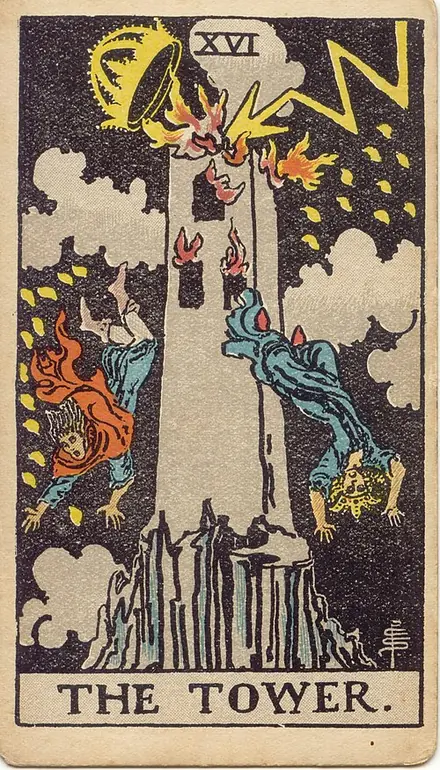
1. The Tower and The Star
The Tower is a structure coming down. The Star is the calm after, and the reason to keep going. Together they often describe a shock that clears the way for a more honest hope. In love, this can be a painful revelation that later becomes the start of a truer connection — or of a recovery that would not have happened while the old story was still standing. The advice hidden in the pair is not "look on the bright side." It is "tell the truth, then give yourself time to breathe."
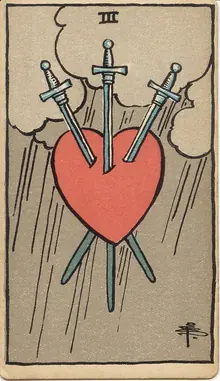
2. The Lovers and the Three of Swords
The Lovers is a meaningful bond or a values-based choice. The Three of Swords is heartbreak, a hard conversation, or a truth that hurts. Together they often mean a relationship (or a choice about one) that requires an honest grief. Sometimes the combination says the love is real and so is the pain; neither card cancels the other. Advice tends toward clarity rather than hope-for-its-own-sake: name what is broken, and decide whether the bond can hold that truth.
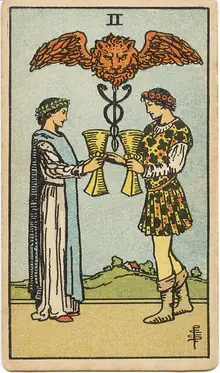
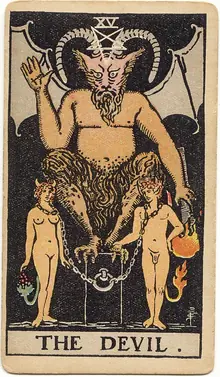
3. Two of Cups and The Devil
The Two of Cups is mutual feeling, a meeting in the middle. The Devil is compulsion, temptation, or a bond that starts to feel like a chain. Side by side, this can be chemistry that is intense and not entirely free: a connection that is real, and also sticky, secretive, or hard to pause. In a reading it is a prompt to ask what is chosen and what is habit. The pair does not automatically mean a "toxic relationship," a phrase that is used too loosely. It does mean the attachment needs a closer look.
4. Death and the Ten of Swords
Both cards talk about endings, which is why people fear seeing them together. In practice, the combination often says "this really is over, and you may already know it." Death is the necessary change; the Ten of Swords is the last painful beat of the old story. The gift of the pair is permission to stop bargaining. The future, if you are reading one, usually begins after this, not inside it. A third card like The Sun or the Ace of Pentacles would start to describe what can be built once the ending is allowed.
5. The Sun and the Six of Wands
The Sun is joy, visibility and simple success. The Six of Wands is recognition, a win that other people can see. Together they are one of the most straightforward "this is going well" combinations in the deck — a promotion, a public yes, a creative project that lands, a relationship that is allowed to be happy in the open. The only caution is pride: make sure the victory is real, not just a performance of one.
6. The Moon and The High Priestess
The Moon is confusion, anxiety, or a situation that looks different in the dark. The High Priestess is inner knowledge, patience, and information that is not ready to be spoken. Together they often say "you do not have the full picture, and forcing a conclusion will make it worse." This is a strong combination for waiting, dreaming, researching quietly, or admitting that your fear and your intuition are getting tangled. It is a weak combination for signing a contract or issuing an ultimatum today.
7. The Emperor and the Four of Pentacles
The Emperor is structure, authority and control. The Four of Pentacles is holding on — to money, to a plan, to a person, to a sense of safety. Together they can describe a very stable situation that is also tight: a boss who will not delegate, a partner who shows love by managing everything, a budget that is safe and joyless, a life that is in order and a little airless. The question to ask is whether the control is protecting something valuable or preventing anything new from entering.
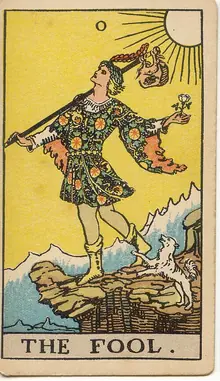
8. The Fool and the Eight of Swords
The Fool wants a beginning. The Eight of Swords feels trapped, often by a story as much as by a circumstance. Together they can mean you are ready to start and you still believe you cannot; or that the first step of a new chapter is to notice which restrictions are real and which are habit. In advice, the Fool usually leads: take a small, low-stakes step that tests the bars of the cage. You do not need a dramatic leap. You need evidence that movement is possible.
9. Ace of Cups and Five of Cups
The Ace of Cups is a fresh emotional opening. The Five of Cups is grief, regret, and the two cups still standing behind the figure. Together they often describe a new feeling arriving before the old one has been fully mourned — a rebound, a tentative yes after a breakup, or the first warmth after a disappointment at work. Neither card is wrong. The combination asks you not to pour the entire Ace into a hole that still needs time. Let the grief have a place, and let the new cup be new.
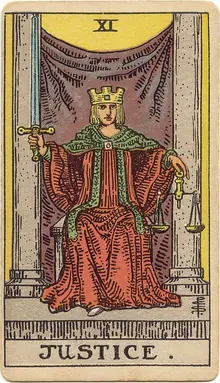
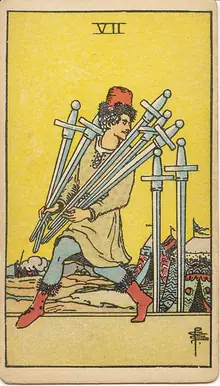
10. Justice and the Seven of Swords
Justice wants fairness, honesty and consequences. The Seven of Swords is evasion, half-truths, or a plan made on the side. Together they are a flag: something is being measured, and something is being hidden. In a legal, work or relationship reading, this pair often says "get the facts in writing" or "a clever shortcut will not hold." If the Seven falls in an advice position next to Justice, the advice is usually the opposite of sneaking — come clean, or at least stop pretending the imbalance will not be seen.
How to practice without memorizing every pair
Take three cards from a free reading or from your own deck. Ignore the book for a minute. Say out loud: "This is a story about X, modified by Y, and the useful move is Z." Then open the individual card meaning pages and see what you missed. The goal is not to be right in a school-test sense. The goal is to leave the spread with one clear sentence you could tell a friend.
A few extra habits help:
- Read left to right, then again as a whole. The order in the spread matters, but so does the "weather" of the group. Three Swords cards in a row is a mind under pressure, even if each card is mild on its own.
- Notice repeating numbers. Two Aces suggest beginnings piling up. Two Fives suggest conflict or instability in more than one area. Two court cards often point to a relationship between styles or people.
- Do not add cards to rescue a combination you dislike. If The Tower and the Three of Swords appear together, sit with that before you hunt for a "clarifier." The combination is already clear.
If you are reading a larger layout, you can still use this method on the most important pair in the spread — the card in the "heart of the matter" plus the card crossing it, for example, in a Celtic Cross. Combinations are not a special technique for experts. They are simply how the cards talk when they are allowed to talk to each other.
And if a combination still feels opaque, write the two card names and your question in a notebook, then come back the next day. Meanings often settle once the pressure to "get the answer" has eased. The deck will still be there. The skill you are building is the ability to hear a sentence where you used to see a pile of symbols.
Try it yourself: free three-card reading, card of the day, yes or no tarot, or the three-card spread guide.