What Reversed Tarot Cards Mean (and When You Can Skip Them)
A reversed card is not a curse, and it is not always the opposite of the upright meaning. Here is a method you can actually use — plus permission to ignore reversals if they do not help you read.
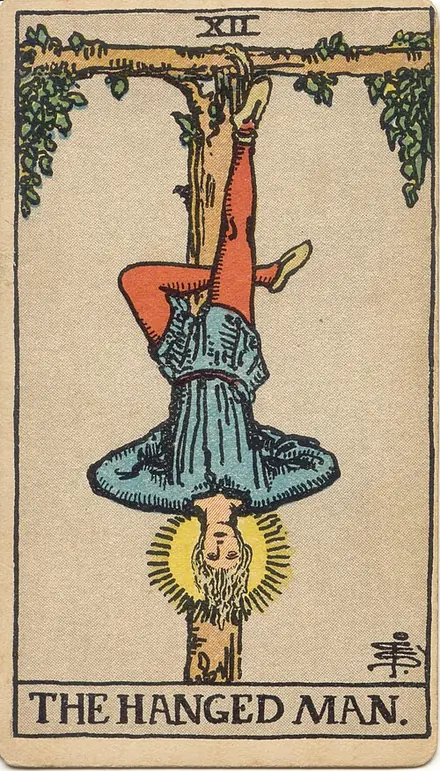
A reversed tarot card is simply a card that lands upside down from your point of view. In the Rider–Waite–Smith images, that can look dramatic: the figure in The Hanged Man is already inverted when the card is upright, and a reversal turns him "right side up," which is a useful joke the deck is in on. In a reading, though, a reversal is easy to over-read. People treat it as a curse, a no, or a sign they have done something wrong. None of that is required.
This guide explains the main ways readers interpret reversals, the method we use on our card meaning pages, and how to decide whether to include them in your practice at all. If you would rather keep every card upright, you can still be a careful, insightful reader. Many excellent ones do.
What a reversal is (and is not)
It is an orientation, produced by the way you shuffle and handle the deck. If you never turn packets as you mix, you will almost never see reversals, and that is a valid choice. If you wash the cards or rotate a portion of the deck, reversals will show up as a regular part of the language.
A reversal is not:
- A guaranteed opposite of the upright meaning. Upright Sun is joy; reversed Sun is not automatic misery. It is more often joy delayed, muted, or hidden.
- A moral verdict. Reversed Justice does not mean you are a bad person. It often means fairness is skewed, delayed, or still being worked out.
- More "psychic" than an upright card. It is a modifier, not a louder voice.
On this site, every card page has a reversed section. We generally read reversals as the same theme, under strain: blocked, delayed, turned inward, or present as too much or too little of the upright quality. That single idea will take you further than memorizing 78 extra opposite meanings.
Five useful ways to hear a reversed card
You do not need all five in every reading. Try them in this order until one fits the question and the surrounding cards.
1. The energy is there, but it is blocked or delayed. Upright Chariot is forward motion; reversed, the wheels are spinning, or the destination is not agreed yet. Upright Ace of Pentacles is a practical opening; reversed, the offer may be slow, poorly timed, or not as solid as it looked.
2. The volume is wrong: too much, or too little. Upright Emperor is structure; reversed, it can be rigidity, or a complete lack of a plan. Upright Temperance is balance; reversed, it can be impatience, or blending so much that no one has a spine left.
3. The theme is happening inside, not in events. Upright Hermit can be a literal withdrawal; reversed, it can be inner work you are avoiding, or isolation that has gone past useful. Upright Four of Cups is a visible apathy; reversed, you may be noticing the cup you had ignored.
4. A refusal, a delay, or a "not yet." This is especially helpful in yes-or-no questions. A reversed yes-card often becomes "not yet" rather than "no." A reversed no-card can mean the difficulty is loosening. Do not force a full flip unless the rest of the spread supports it.
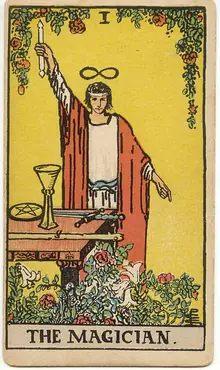
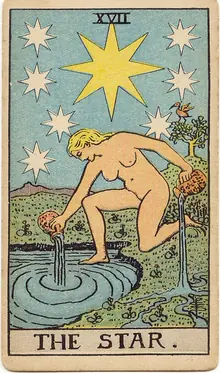
5. The shadow of the upright card, without the resources that usually come with it. Upright Magician has tools and will; reversed, the tools may be unused, or the charm may be running ahead of substance. Upright Star is hope; reversed, hope may be hard to access, which is not the same as hopelessness.
If none of these fits, look at the card's upright meaning and add the phrase "in a tangled way." Then look at the cards beside it. Reversals almost always make more sense as modifiers in a combination than as isolated verdicts.
Examples across the Majors and the suits
[The Lovers](/tarot-card-meanings/the-lovers/), reversed, is less often "this love is doomed" than "a values clash is not being faced," or "a choice is being postponed." In a love spread, it can ask you to notice a misalignment you hoped chemistry would cover.
[The Tower](/tarot-card-meanings/the-tower/), reversed, can mean a shock that is delayed, internalized, or partly already underway — the crack in the wall you are trying not to see. It can also mean you are in the aftermath, cleaning up, rather than in the lightning strike. It is not a free pass from change.
[Death](/tarot-card-meanings/death/), reversed, often describes resistance to an ending, or a transformation that is slow and unfinished. The advice is rarely "nothing will change." It is more often "stop bargaining with a chapter that is already closing."
[Three of Swords](/tarot-card-meanings/three-of-swords/), reversed, can be a heart beginning to mend, or a pain that is being swallowed instead of spoken. Only the question and the other cards can tell you which. If The Star or the Six of Swords is nearby, healing is a reasonable reading. If the Nine of Swords is nearby, the hurt may be looping in the mind.
[Ten of Pentacles](/tarot-card-meanings/ten-of-pentacles/), reversed, can point to family tension around money or legacy, a picture of stability that is not as secure as it looks, or a delay in a long-term plan. It is a practical card even upside down; look for the earthly detail, not a vague curse.
Court cards, reversed, often describe a style that is immature, blocked, or turned inward rather than a "bad person." A reversed Knight of Cups might be a romantic offer that is all words, or a person who cannot quite show what they feel. A reversed Queen of Swords might be clarity that has become sharpness, or a truth that is not being spoken yet.
A method you can use in any spread
- Read the card as if it were upright, in its position, and say that sentence first.
- Add one modifier from the list above — blocked, delayed, inward, too much, too little, not yet.
- Check the neighboring cards. If they support the modifier, keep it. If they contradict it, you may be stretching.
- Translate the result into a next step or a clearer view of the situation, not into a catastrophe.
In a Celtic Cross, a reversed card in the "hopes and fears" position is especially worth sitting with; the thing you want and the thing you fear may be the same energy, tangled. In an advice position, a reversal often means "adjust the upright advice" rather than "do the opposite." Reversed Strength as advice is rarely "be cruel." It is more often "your patience is running out; find a kinder form of firmness," or "you have been over-enduring."
When you can ignore reversals
You can ignore them if they consistently make your readings muddy. You can ignore them if you are a beginner and 78 meanings are already plenty. You can ignore them if you did not shuffle for them, and a card landed upside down because the deck slid. Turn it upright and move on.
Some readers only reverse Major Arcana, or only look at a reversal when it appears in an advice or outcome position. That is a reasonable middle path. The point of the system is to add nuance, not to double the number of things you can worry about.
If you do use reversals, be consistent for a while so you can learn your own language. Write down how you read a reversed card, then see how the situation unfolded. Over time you will notice whether "blocked," "inward," or "not yet" is the voice that actually matches your readings. Keep that voice. Let the others go.
A last encouragement, because reversed cards scare people more than they should: the image is still the same image. The Sun is still the sun, even upside down. The Star is still a star. The reversal asks you to find the theme in a more awkward posture — delayed, hidden, or in need of a small correction. That is a human situation, not a verdict from the deck. Read it with the same calm you would offer a friend, then put the card back, square the deck, and return to the part of the problem you can actually touch.
Try it yourself: free three-card reading, card of the day, yes or no tarot, or the three-card spread guide.