Yes or No Tarot Card Meanings: A Complete, Honest Guide
A one-card yes or no can be a useful snapshot, as long as you know the limits. Here is how we read each card, and when the honest answer is "it depends."
A yes-or-no tarot reading is simple to do and easy to over-trust. You hold a question, you draw one card, and you want the universe to pick a lane. Sometimes it will. The Sun on "Will I enjoy this trip?" is a cheerful yes. The Ten of Swords on "Is this already over?" is often a painful yes, which is not the same as the yes you wanted.
The method is still useful if you treat it as a snapshot, not a contract. On this site, every card has a leaning — yes, no, or maybe — on its meaning page, and you can draw one card in the yes or no tool. This article is the reference behind that tool: why cards lean the way they do, how a question can flip the meaning, and when you should put the single card away and use a three-card spread instead.
How a yes-or-no leaning works
We assign each of the 78 cards a typical answer based on its traditional energy, not on superstition. Cards of green lights, growth, clarity, mutual feeling and forward motion tend to lean yes. Cards of endings, conflict, depletion, deceit or "not like this" tend to lean no. Cards of waiting, complexity, missing information or mixed blessings lean maybe.
That leaning is a starting point. The question matters just as much as the card. "Is it over?" plus the Ten of Swords is a yes. "Will this get easier this week?" plus the same card is closer to a no. "Should I keep pushing?" plus The Hanged Man is usually "not by pushing." Always run the card back through the actual sentence you asked.
Reversals, if you use them, often soften a yes into "not yet," or soften a no into "the difficulty is lifting." They rarely turn a card into its exact opposite without help from context. Our guide to reversed cards explains the approach.
And some questions should not be asked as yes or no at all: medical outcomes, someone else's private choices, or anything where you would be using the deck to avoid a conversation you already need to have. For decisions with real stakes, use the method in tarot for decision making.
Major Arcana: the big yes, no and maybe cards
Often lean yes: The Fool (a beginning is favored, if you accept some risk), The Magician (you have what you need to act), The Empress (growth, care, a fertile yes), The Lovers (yes if the choice aligns with your values), The Chariot (yes, with focus), Strength (yes, with patience), Wheel of Fortune (a turn in your favor is possible), Temperance (yes, by balance rather than force), The Star (a hopeful yes, often after a hard stretch), The Sun (one of the clearest yes cards in the deck), The World (completion, a yes that closes a cycle well).
Often lean no, or "not like this": The Hierophant can be a yes to a traditional path and a no to going it alone — context is everything, so we often treat it as maybe unless the question is about convention. The Tower is rarely a comfortable yes; it says a structure will not hold. The Devil is usually "no, or not for a free reason" — the thing you want may also be a trap. Death is a no to "will this stay as it is?" and can be a yes to "is a chapter ending?" The Hanged Man is almost never "push now."
Often lean maybe: The High Priestess (information is incomplete), The Hermit (you need more time or solitude first), The Moon (you cannot see clearly yet), Judgement (a calling is present, but you still have to answer it), Justice (the answer depends on what is fair and true, and on what you have done so far). The Emperor is a yes to structured, practical plans and a no to vague ones.
When a Major appears in a yes-or-no draw, give it extra weight. It is commenting on a theme, not only on a mood.
The four suits at a glance
Suits have a weather of their own. Aces and most even-numbered "progress" cards lean toward yes. Fives, some sevens, and most tens of Swords or Wands need more care.
Suit of Wands
Wands are heat and initiative. The Ace of Wands, Two, Three, Four, Six and Eight of Wands generally lean yes — start, expand, celebrate, move. The Five of Wands is conflict; often a no to "will this be easy?" and a maybe to "can this work if we compete fairly?" The Seven of Wands is "yes, if you defend it." The Nine and Ten of Wands are weary: maybe, or yes with a cost that might be too high. Court Wands (especially the Knight and King) often lean yes to action and maybe to patience.
Suit of Cups
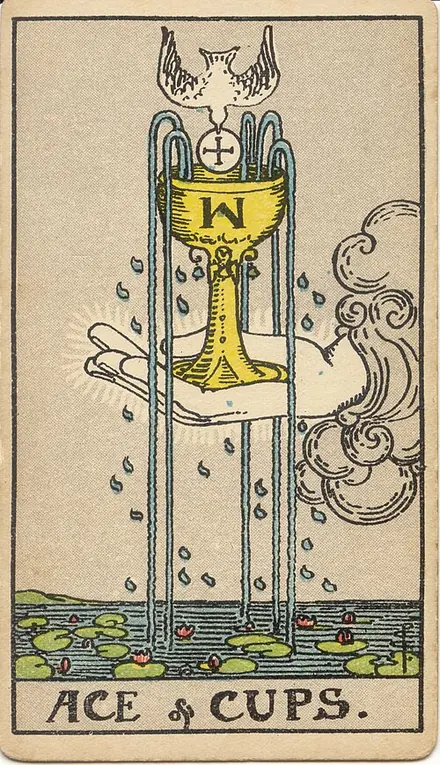
Cups are feeling and relationship, and they produce many of the "yes" people hope for. The Ace, Two, Three, Six, Nine and Ten of Cups typically lean yes to questions of love, belonging and emotional fulfillment — with the usual reminder that a card is not a marriage certificate. The Four of Cups is a maybe or a "you may be missing it." The Five of Cups often leans no, or "not until you grieve what is lost." The Seven of Cups is a classic maybe: too many options, or a fantasy in the way. The Eight of Cups is often a yes to leaving and a no to staying as things are.
Suit of Swords
Swords are thought, words, decisions and sometimes pain. The Ace of Swords is a yes to clarity, truth and cutting through. The Two of Swords is a maybe that is really a stalemate. The Three, Five, Seven, Eight, Nine and Ten of Swords usually lean no, or yes only to questions about endings, conflict or "is this hurting?" The Four of Swords is a maybe that advises rest first. The Six of Swords can be a yes to leaving and a maybe to "is the hard part over?" Court Swords tend to say "yes, if you are honest and precise."
Suit of Pentacles
Pentacles are time, money, work and the body. The Ace, Three, Six, Nine and Ten of Pentacles often lean yes to practical questions — especially if you are willing to do the work. The Two of Pentacles is a maybe: it can work if you juggle well. The Four of Pentacles is a maybe or a "yes, but tightly." The Five of Pentacles often leans no, or "not without help." The Seven is "not yet — wait and tend." The Eight of Pentacles is a yes to effort and craft. Court Pentacles often lean yes to slow, reliable plans and no to shortcuts.
A quick reference table
The leanings below match the ones we use on each card page. They are typical answers, not laws.
| Leaning | Examples (not a complete list) | How to hear it |
|---|---|---|
| Yes | Sun, World, Star, Magician, Ace or Two of Cups, Six of Wands, Ace of Pentacles | The energy supports a forward move, especially if you participate. |
| No / not like this | Tower, Devil, Ten of Swords, Five of Cups, Five of Pentacles, Three of Swords | The current path is blocked, costly, or already ending. |
| Maybe / not yet | High Priestess, Moon, Hanged Man, Two of Swords, Seven of Cups, Seven of Pentacles | You need time, information, or a better question. |
For any specific card, open its page — for example Is the Lovers a yes or no card? — and read the yes-or-no section in full. The short leaning is only the headline.
When one card is not enough
Draw a second reading only if the question changed. If you got a maybe, the follow-up is usually a three-card spread: situation, obstacle, advice. If you got a no and you immediately reshuffle, you are bargaining, not reading.
One-card answers also struggle with mixed realities: "Will this job be good for me?" can be a yes for money and a no for sleep. The Ten of Pentacles will not tell you that on its own. A small spread will.
If you are asking about love, a dedicated love spread is almost always kinder and more accurate than a single yes or no about "the one." And if you are asking about someone else's private feelings, remember the ethical limit: the cards can help you understand your position; they cannot give you a backstage pass to another person's mind.
Used with those limits, a yes-or-no card is a clean, honest tool. It will not make the decision. It will tell you which way the weather is leaning, so you can walk out the door with a little more sense and a little less superstition. Then, if the question still matters, give it the space of three cards, a notebook, and a day of ordinary life. That is usually when the real answer arrives — not as a command from the deck, but as a sentence you are finally willing to stand behind.
Try it yourself: free three-card reading, card of the day, yes or no tarot, or the three-card spread guide.